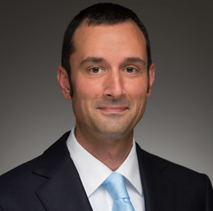
Daniele Schiavazzi
Associate Professor, Department of Applied and Computational Mathematics and Statistics, University of Notre Dame
May 1st, Friday, 12:00-1:00 p.m., 2026 - MRB Seminar Room (1st floor)
The Colloquium Talk is sponsored by the UC Riverside Artificial Intelligence Research and Education Institute and the Interdisciplinary Center for Data-driven Modeling in Biology
Abstract: Applications of generative modeling and deep learning in physics-based systems have traditionally focused on building emulators - computationally inexpensive approximations of input-to-output maps. However, the remarkable flexibility of data-driven architectures opens opportunities to broaden their scope to include model inversion and identifiability analysis. We present InVAErt networks, a framework for data-driven analysis and synthesis of parametric physical systems. Through numerical experiments, we demonstrate the framework's versatility across a wide range of problems, including linear systems of equations, spatio-temporal PDEs, and lumped-parameter physiological models. We further introduce an extension for systems with observational noise, enabling the separation of structural from practical identifiability in complex ill-posed inverse problems. Finally, we discuss recent efforts to integrate InVAErt networks with large language model agents for applications in cardiovascular health.
Bio: Dr. Schiavazzi is an Associate Professor in the ACMS Department, and a Concurrent Associate Professor in the AME Department at the University of Notre Dame. He graduated with honors and received a Ph.D. degree in Applied Mathematics from Universita' degli Studi di Padova, Italy. Dr. Schiavazzi completed his Ph.D. thesis as a Visiting Researcher at Stanford University, followed by a Postdoctoral position at University of California, San Diego and Stanford University. His main research interests are in stochastic analysis, multi-resolution approximation, numerical modeling and finite element analysis, adaptive Markov chain Monte Carlo estimation and use of computational models to inform clinical decision making under uncertainty.